
Cadson Engineering & Services
RAS | ROTI MACHINE | AUTOMATION | CONSTRUCTION | CONVEYOR | MACHINE | DESIGN | ENGINEERING | MANAGEMENT
RAS | ROTI MACHINE | AUTOMATION | CONSTRUCTION | CONVEYOR | MACHINE | DESIGN | ENGINEERING | MANAGEMENT
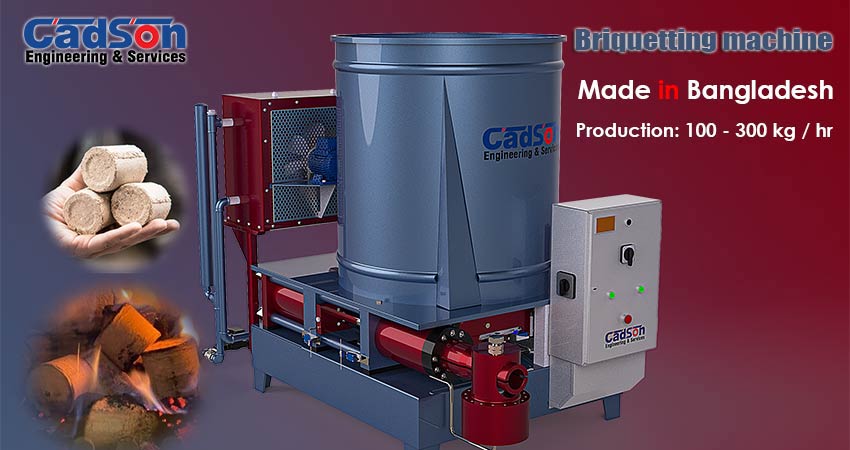
Briquettes are formed by compressing agricultural waste, forestry waste, or solid waste into cylindrical shapes. This is done using a briquetting press machine. A briquetting machine helps convert waste materials into solid briquettes, bio-coal, or white coal. The process applies very high pressure to the raw materials, causing them to harden naturally through the lignin present in the biomass.
High-quality biomass briquette production requires a high-quality biomass briquette machine. These machines can be sourced from a reliable biomass briquette machine manufacturer. A complete briquette production unit may include several machines such as a wood chipper, biomass shredder, hammer mill, drying system, and the briquetting press machine itself.
The briquette production process begins by crushing the raw material into pieces of around 20–50 mm using a crusher, shredder, or wood chipper. Hammer mills are then used to grind the material further into a finer form. A drying system removes moisture from the raw material before it is finally processed through the briquetting press machine. This complete setup is known as a briquette plant.
Biomass briquette machine by CADSON Bangladesh for briquette production from agricultural waste.

There are several types of briquetting presses used for biomass briquette production:
This mechanical briquetting press consists of a ram (piston) and a die. It is powered by an electric motor or diesel engine. During briquette production, the ram compresses biomass material into a die under very high pressure to form briquettes.
For large-scale production, these machines can generate compression forces of up to 200 MPa, with production capacities ranging from approximately 200 kg/hour to 2,500 kg/hour.

Introducing the Hydraulic Biomass Briquetting Machine, proudly made in Bangladesh by CADSON Engineering & Services. Available in various capacities such as 100, 120, 150, 200, 250, and 300 kg per hour, these machines are designed for efficient and eco-friendly biomass briquette production. Optional PLC automation and HMI systems can further improve operational control and efficiency.
These machines are ideal for converting biomass waste such as sawdust, wood chips, rice husk, and similar materials into valuable renewable fuel sources.
In a hydraulic briquetting press, the raw material is fed by a screw conveyor into a pre-compactor and then pushed into the die by the main piston. The compression pressure can be adjusted, which changes the final density of the briquettes.
Industrial biomass briquette machine made in Bangladesh by CADSON for fuel briquette production.
Various types of manual briquette presses are available for small-scale use. These machines are operated by hand and require little or no electricity. Manual presses are suitable for home use and low-volume briquette production.
Screw briquette presses generally come in three types:
In these machines, a screw continuously feeds the raw material into a heated cylindrical die. The heat helps release natural lignin, which binds the biomass together. This technology works by forcing raw material through a compression chamber where it is compacted into briquettes.
Roller briquette presses are used to produce pillow-shaped briquettes from various feedstocks. Two cylindrical rollers rotate in opposite directions on parallel shafts. The material passes through the small gap between the rollers, where it is compressed and formed into briquettes.
The final briquette quality depends on several factors, including material type, moisture content, particle size, and binder addition.
High-quality biomass briquettes are generally produced through the following steps:

Biomass briquettes can be used in industrial, commercial, and domestic applications. They are commonly used for thermal applications as an alternative to fossil fuels. Biomass briquettes help utilize waste materials and convert them into valuable fuel.
Common industries and sectors where biomass briquettes are used include:
The compression process increases the heat value of briquettes. As a result, briquettes produce more intense heat compared to loose fuel materials. They also contain less ash, making them hotter and longer-lasting.
Biomass briquettes are durable and easy to store. They can be stacked in piles or stored in cylindrical or rectangular block form. Since briquettes are made from plant and animal waste, their production cost is relatively low. In addition, briquettes are environmentally friendly.
Key advantages of biomass briquettes include:

Introducing the Hydraulic Biomass Briquetting Machine, proudly made in Bangladesh by CADSON Engineering & Services for efficient and eco-friendly biomass fuel production.
In today’s world, where energy demand is increasing and agricultural waste is becoming an important fuel source, biomass briquettes offer a sustainable solution for both industrial and household fuel needs.
With the help of a high-quality briquette press machine, bio-coal briquette production can become one of the best ways to meet energy demands. It is a sustainable, environmentally friendly, and renewable energy alternative.
If you are looking for a reliable biomass briquette machine manufacturer, CADSON Engineering & Services offers industrial briquette machine solutions designed for efficient biomass processing and long-term performance.
Explore our industrial briquette machine solutions designed for efficient biomass processing.
View Briquette Machine

